
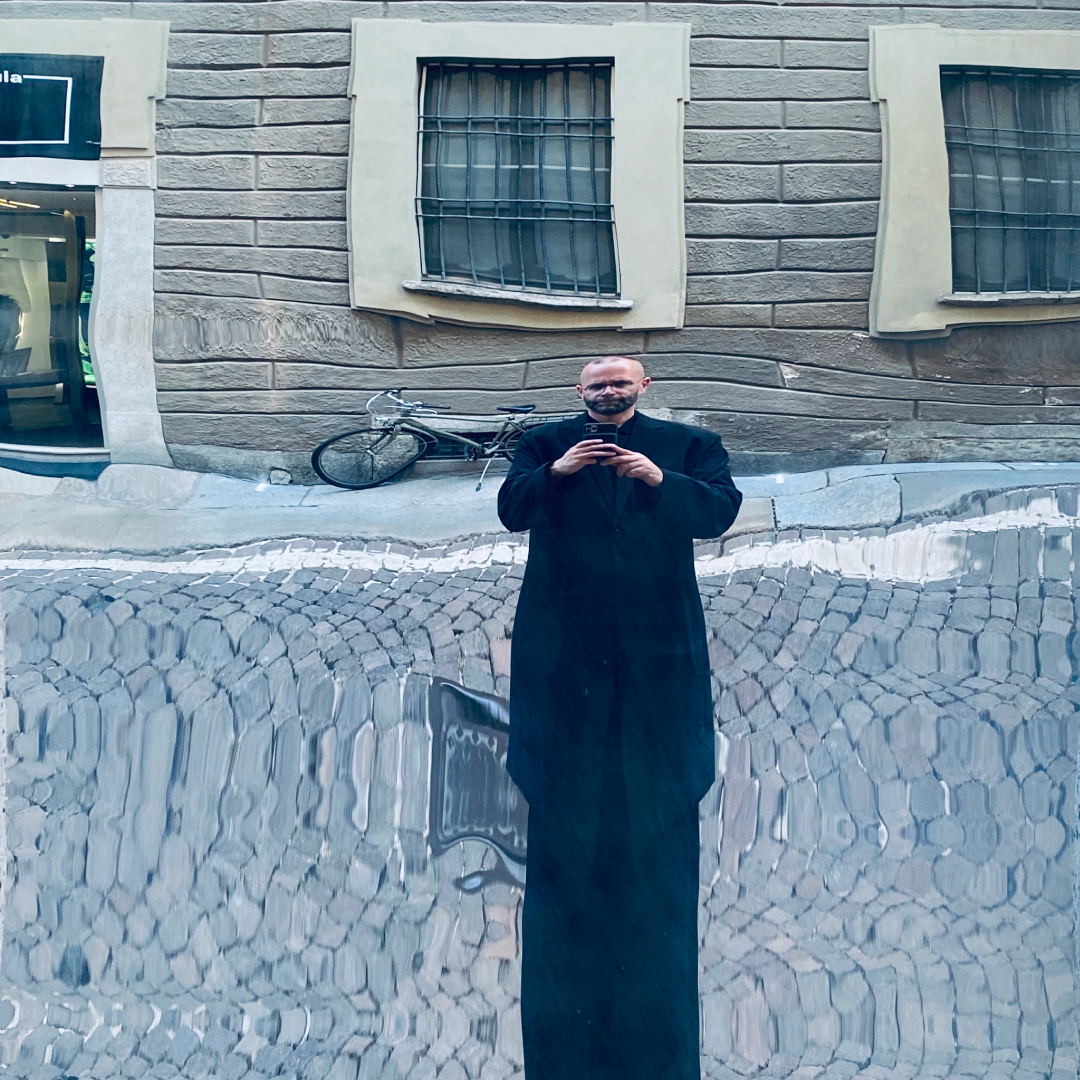
Angelo Flaccavento on Taste, Doubt, and the Beauty of Uncertainty


Show Notes
Summary
Angelo Flaccavento has long been one of fashion’s most distinctive critical voices — sharp yet empathetic, rigorous yet imaginative, always willing to question his own certainties. In this conversation, he traces his path from a Sicilian childhood spent absorbing magazines in boutique backrooms to becoming a writer whose clarity and candor designers both fear and admire.
We discuss the formative power of self-doubt, the responsibility of the critic in an era shaped by branding and algorithms, and why genuine surprise has become fashion’s rarest commodity. Angelo reflects on taste as a lifelong education, the tension between fantasy and reality, and the importance of staying fluid rather than defined in a moment obsessed with categorization.
“I’m a dreamer, but not an escapist. Fantasy has to somehow crash to the ground in order to become reality.” - Angelo Flaccavento
Episode Highlights
- A Sicilian childhood shaped by boutiques and early fashion literacy
Angelo grew up in Ragusa surrounded by family-run boutiques at the height of Italy’s fashion boom. Magazines, Versace dresses, Guy Bourdin images, and the glamour of the early ’80s became his first education in style and visual culture. - Discovering i-D and turning Ragusa into his personal London
Getting a subscription to i-D as a teenager becomes a defining moment. He reads each issue obsessively, treating it as a window into a world he hasn’t yet reached — the foundation of his sharp, culturally attuned eye. - From aspiring designer to critic: finding the right medium
Though he once dreamed of being a designer, he realized he was more drawn to ideas, imagery, and interpretation. Writing became his path, encouraged by teachers who sensed his voice before he did. - A voice that evolves rather than settles
Angelo talks about tone and style as living entities — shaped by constraints, sharpened by editors, and never fixed in place. He values clarity, concision, and atmosphere, always pushing himself toward more precision. - Doubt as a creative engine
He sees doubt not as insecurity but as momentum, calling it “the essence of progress.” Self-questioning keeps him open, curious, and resistant to stagnation. - Criticism as decoding, not destruction
For Angelo, the critic’s role is to cut through PR storytelling and help readers understand what they’re actually seeing. He believes in honesty delivered with generosity — critique as illumination, not cruelty. - Maintaining integrity in a political, PR-driven industry
He speaks openly about the emotional and professional navigation required each season, from access issues to difficult conversations, and why seeing shows live is essential to telling the truth. - Fashion’s power to surprise
Angelo celebrates the rare, electric moments when a show shifts the mood of the entire industry — reminders of why fashion still matters and how a collection can rewire the cultural conversation. - Taste as instinct refined over a lifetime
For him, taste is a mix of instinct and education — shaped by art history, architecture, vertical lines, trial and error, and everything one has ever seen. Taste is biography turned into perspective. - What is contemporary now: resisting definition
Angelo concludes that the most contemporary stance is fluidity — refusing to let algorithms, labels, or nostalgia define us, and staying open enough to see the world anew.
Notable Quotes:
“Doubt is the essence of progress.”
“For me, the role of the critic is not to show the world how harsh or difficult to please I am, but to offer instruments so readers can decode things their own way.”
“If you slash someone, they only think about the scar. If you give it with the feathers before, it’s more pleasant than just getting a stab.”
“That is what is so exciting for me about fashion. The surprise. You never know what’s going to happen.”
“Taste has roots that are almost instinctual, but then there is the part that comes from the brain — learning what you like throughout your whole life.”
“I’m a dreamer, but not an escapist. Fantasy has to somehow crash to the ground in order to become reality.”
“Sometimes I see the show, I read the press release, I listen to the storytelling, and I tell myself, what the fuck is this? This is not making any kind of sense.”
“For me, the real luxury today is looking at things through your own eyes and forming your opinion, not being directed by algorithms or propaganda.”
“I want the reader to feel like they are sitting beside me. There are many more layers than just looking at clothes.”
“What is contemporary now is avoiding definition — being fluid and not easy to grasp.”


Related Episodes






























Contact Us


