
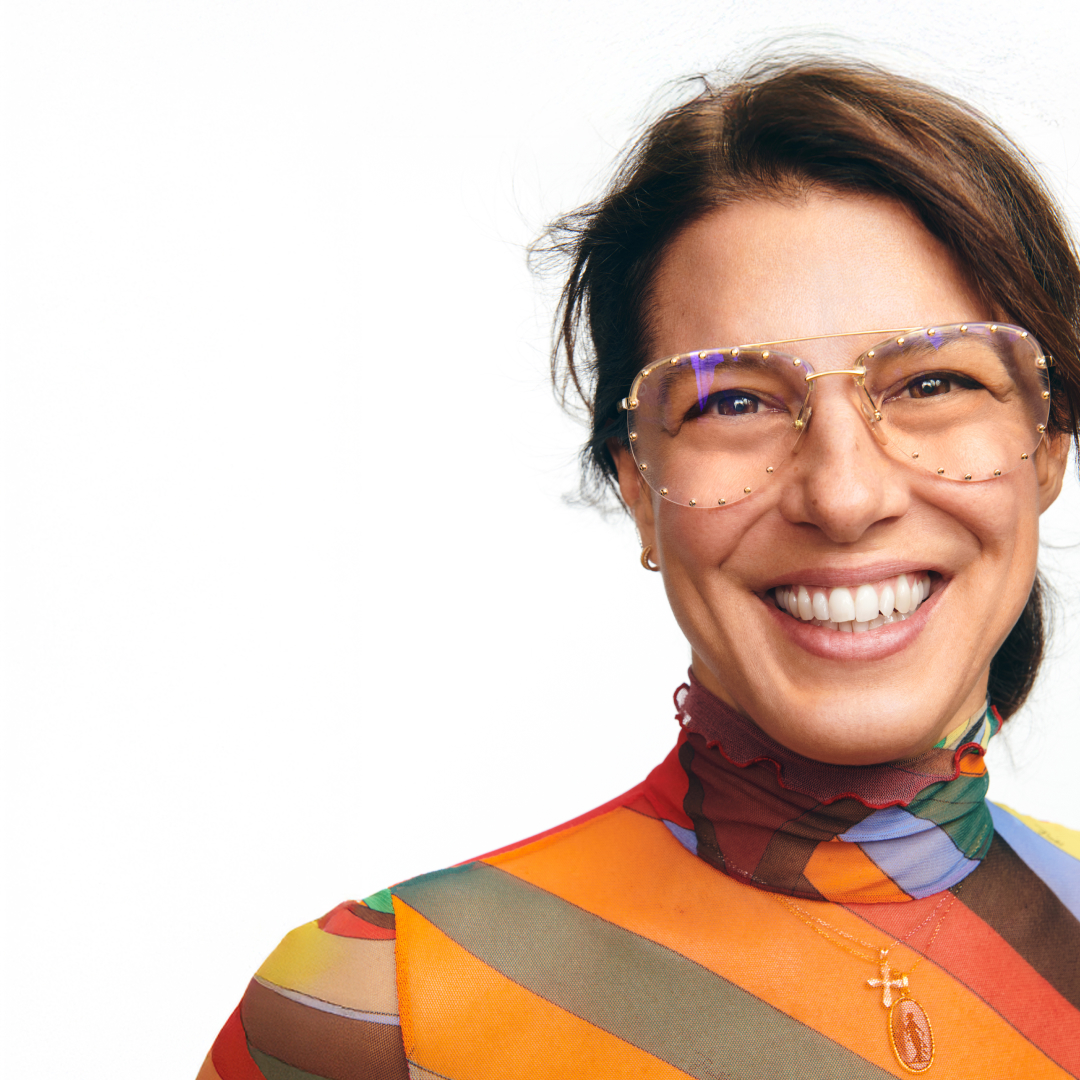
Camille Miceli on Pucci, Play, and Joie de Vivre


Show Notes
Summary
Camille Miceli brings a vivid, almost incandescent joie de vivre to Pucci, treating color, movement, and intuition as both vocabulary and philosophy. Her worldview is shaped by an upbringing steeped in art and fashion, and by formative chapters with Alaïa, Lagerfeld, Jacobs, and Raf Simons — each adding a layer to her finely tuned sense of glamour and discipline.
She reflects on the value of frivolity in an anxious age, the necessity of surrounding oneself with challengers rather than cheerleaders, and the quiet radicalism of returning Pucci’s prints to hand-drawn imperfection. The picture that emerges is of a creative director who treats joy not as escapism, but as a practiced, precise way of making a brand — and a life — feel vividly alive.
“We didn’t come to this planet to suffer. I’m here to enjoy, even if there are stressed days. You have to laugh sometimes.” - Camille Miceli
Episode Highlights
- An upbringing steeped in art and fashion
Camille grows up between an art-world father and a fashion-world mother, surrounded by New Realists, Guy Bourdin shoots, and Azzedine Alaïa at the dinner table — early immersion in glamour, image, and attitude. - Alaïa as her first tough teacher
At sixteen she interns for Azzedine Alaïa, who is lovingly ruthless about precision. The “traumatic” rigor of placing rocks every ten centimeters becomes the root of her perfectionism and obsession with detail. - Chanel and Karl as excess and foresight school
At Chanel with Karl Lagerfeld, she encounters fashion as total universe — decor, invitations, product, marketing — and learns to think several moves ahead, like the “Chanel forever” bag response to a critical article. - Marc Jacobs and the power of generosity and teams
At Louis Vuitton, Marc pulls her fully into the creative side, asks her to design earrings, and kick-starts her jewelry career. She absorbs his generosity, his habit of crediting collaborators, and his refusal to work with “yes people” — a model she now applies as a creative director. - Dior, Raf, and the dialogue with art and design
At Dior under John Galliano and then Raf Simons, she deepens her passion for art, design, and couture, finding common ground with Raf through shared references and visual obsessions. - How all those experiences prepare her for Pucci
Years in fittings, communication, and collaborations give her a 360-degree approach: she thinks about clothes, image, stores, and storytelling as a single ecosystem, which she now applies to Pucci’s collections and retail spaces. - Pucci as art, joy, and imperfection
She sees Pucci prints as psychedelic artworks and immediately brings hand-drawing back to restore “imperfection as perfection.” The wobbly lines and pressure marks make the prints human, charming, and alive. - Using print as logo and rethinking heritage codes
Rather than drowning everything in pattern, she treats the print as a signature — a button, a jacquard, a matte-and-shine texture — so a black jacket can still read Pucci. She evolves the codes instead of changing them seasonally. - A modern stance on fashion systems and waste
She pushes see-now-buy-now because she hates the lag between image and product, especially in an age of instant gratification. Pucci runs only two collections a year, staggered like intelligent “drops,” which lets her reduce waste and think deeply instead of chasing volume. - Collaborations, culture, and what’s contemporary now
She favors collaborations that bring true know-how (technical skiwear, for example) over hype, and considers the Art Basel entrance carpet a proud moment of print as art rather than logo spam. When asked what is contemporary now, she lands on sharing, respect for others, and radical care for the planet — especially water — and dreams of self-sufficiency as the ultimate luxury.
Notable Quotes:
On Pucci and perfection
“For me at Pucci, imperfection is perfection. When you hand-draw the prints, the little shakes and pressure marks make them human and alive.”
On what fashion really is
“We’re doing something completely frivolous. It’s not food, it’s not a need, so you have to approach it like that.”
On enjoying life and work
“We didn’t come to this planet to suffer. I’m here to enjoy, even if there are stressed days. You have to laugh sometimes.”
On collaboration and ego
“The secret is to be surrounded by people who are better than you. I want the best, people who know things I don’t.”
On inspiration
“Why do we always have to justify a creative gesture? Sometimes an idea just comes from your mind and you don’t even know exactly where it’s from.”
On instinctive design
“Often the best things happen in a click. You don’t think too much, you do it, and it works.”
On using Pucci codes today
“You do a black jacket, and instead of a logo you put a printed button. That little detail already says Pucci.”
On see-now-buy-now and impatience
“If I do an image that is impactful, I want the woman to be able to buy it immediately. If I see something and I like it, I want it now, not in six months.”
On Italy and joy
“Italy is about enjoyment and positivity. You feel life everywhere. That joy and color are a big part of who I am and why I relate to Pucci.”
On what is contemporary now
“Contemporary now is sharing, respecting people around you, and no waste. We have to respect the planet. Water will be the caviar of the next years.”


Related Episodes






























Contact Us


