
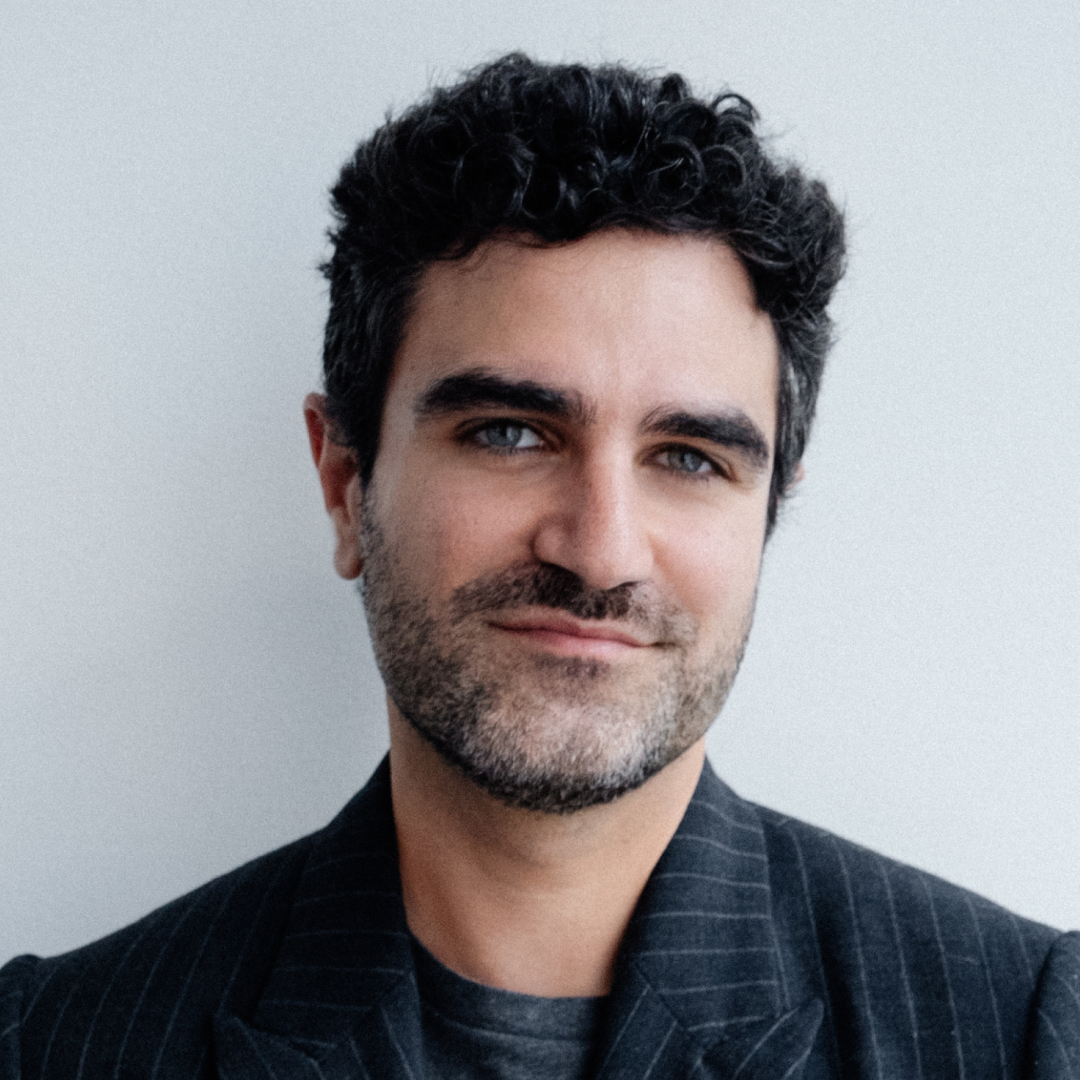
Adam Baidawi on Who Gets to Define Modern Masculinity


Show Notes
Summary
Adam Baidawi may be in the early days of his role as GQ’s global editorial director, but he’s already making headlines with some controversial, if not questionable, choices in cover subjects. Whether you thought Tom Cruise was the right choice, thought he looked good or bad, or questioned if the timing actually made any relevant sense, it’s hard to deny the scale of attention and conversation the cover and interview generated. In this episode, Adam shares how he reverse-engineered his ideal career, how he plans to tackle the idea of modern masculinity as the editor of the most recognized men’s title, and why he believes candor is essential to cutting through the noise. He even pushes back on a few of my own points, which, for me, is always the sign of a great guest.
“Is it that there's no monoculture, or is it just that there are fewer entities capable of creating a monocultural moment?” - Adam Baidawi
Episode Highlights
- 01:31–02:19 | Growing Up Australian While Holding On to His Family’s Cultural Identity
- 02:20–04:52 | The Sisters Who Shaped His Cultural Education
- 04:52–06:48 | Putting His Hand Up for Literally Everything
- 08:00–10:01 | Imagining a Career in Reverse
- 10:03–11:29 | Flying from Melbourne to England for a Chance at British GQ
- 11:31–13:47 | Finding His Own Leadership Style Through Experience
- 14:21–15:35 | Why Curiosity Is the Essential Prerequisite for an Editor
- 17:50–19:09 | We have More Access to Information, but there’s Less Discovery
- 19:46–21:29 | The Editor’s Responsibility to Inspire a Reaction
- 22:41–23:56 | Is the Monoculture Dead, or Have We Lost the Power to Create It?
- 25:20–26:10 | An Editor’s First Responsibility Is to the Audience
- 26:59–28:00 | The Editor’s Role Is to Curate
- 29:17–31:51 | Why Lecturing an Audience Rarely Changes Minds
- 32:28–35:05 | Rethinking the Guest List and the Value of Intimacy
- 34:00–36:25 | Why Intimacy and Curation Matter More Than Scale
- 37:02–37:38 | Expanding GQ Beyond Fashion and Entertainment
- 38:00–39:52 | Meeting Audiences Wherever They Choose to Engage
- 40:35–41:43 | Why Video Journalism Deserves the Same Rigor as Print
- 41:57–43:41 | “Candor Is What’s Contemporary Now”
- 43:41–End | The Value of Honesty in Contemporary Culture
Notable Quotes:
- On the Cost of Assimilation “They were incredibly clear eyed about their ambition, their ambition for them, for their family and for their children. And one of the big things they did was really insist that we assimilate in a big way. […] They only spoke to me in English because they wanted me to grow up Australian and to have maximum opportunity. It's a very immigrant mindset.”
- On the Cultural Education His Sisters Gave Him “They kind of gave me my cultural diet, which, you know, they were eight and ten years older than me. So a lot of it was like me experiencing culture a little bit sooner than I should have. But I watched the movies that they watched. I listened to the music they listened to.”
- On Why Experience Matters More Than Perfection “I put up my hand for literally everything. […] What that incredible opportunity did give me was a lot of reps. […] I was playing a volume game. But eventually when you play a volume game, you get better at preparing for interviews or asking more interesting questions, or pressing someone on a follow up question, or you're writing with fewer cliches.”
- On Building a Creative Career From the Periphery “You have to be quite industrious to build a creative career out of Australia. You're very far away from everything, you're quite disconnected and your opportunities are quite scarce. […] I recognized if I just put one foot in front of the other, I'd get closer and closer. So I basically tried to, like, imagine a career in reverse.”
- On Recognizing the Opportunity That Fits Your Experience “I'd been so obsessive, I had flown myself to England and stayed with my cousin so I could do work experience at British GQ. I'd funded end to end big international reporting odysseys in the hopes of getting more long form reportage into my book. […] There are probably very few people on the planet who know both a lot about the Middle East and its culture, and a lot about GQ.”
- On Finding Your Own Leadership Style “As an editor, you're doing nothing more than spending all day making consequential decisions and trying to hone in your instinct on making sure you get as many of those decisions right as possible. […] Eventually, like, you grow up and you kind of figure out your own version of what your leadership style is.”
- On Curiosity as an Editor's Essential Quality “I think the main prerequisite would be curiosity. […] I kind of knew a lot, a little bit about everything. I was like in a complementary way. I was a generalist. […] I think I had a reasonable radar for what makes an interesting story, what's consequential versus just sounds like it could be cool.”
- On Investing in Local Creativity “An indicator that we had proven that this is a region worth investing in, teams worth investing in, journalism and creativity worth investing in. […] At GQ Middle East, I think that was an education on how local specificity can shape a creative project.”
- On Becoming a Global Editor Through Local Perspectives “I learned so much about all the other regions in the world. I directly managed the editors that we had in Tokyo and Taipei and Mexico City. […] You learn so much about the local scenes, the local creativity, the photographers, the stylists, the DJs, the venues, the business, all of it.”
- On Whether the Monoculture Is Dead “Is it that there's no monoculture, or is it just that there are fewer entities capable of creating a monocultural moment?”
- On Learning to Detach From Public Opinion “There have been many moments in my career where it would have been very easy to get distracted or overly concerned with what people might think of me or my work. […] What's true, whether you're being drenched in praise or having your ideas critiqued very publicly, what's true is that that's just not a healthy dynamic for a creative to swim in for too long. […] My responsibility is to my readers. To my audience.”
- On Why Editors Matter in a World of Infinite Choice “I often think about it in a literal way. We're editing editing culture, and one thing that frustrates me as a consumer [is] that there's so much optionality. […] I think that that's a state of overwhelm as a consumer of culture. The editor's role is to edit, to curate, and in that sense, you can call that a gatekeeper. You can call that a guide, whatever it might be. […] You could argue it's even more important now that everyone has infinite content optionality.”
- On Why Lecturing an Audience Doesn't Work “I think there's so much hand-wringing right now, and so much upset and anxiety that I think it would have made sense in a certain way for GQ to be like, do this, don't do that. Do it in quite an earnest way to policemen and try to improve the state of man, but I found the first idea to be quite avoidant, and also maybe missing out on a lot of opportunities to have cultural impact. And I found the second option […] to be kind of hyper earnest and not particularly sexy. And I don't think that lecturing an audience is a very effective way to win people over.”
- On GQ as a Reference Point for Masculinity “When people think of men today, they should see it reflected in, um, and also debated in the pages of GQ. And sometimes we'll be holding up emeritus society, and other times I'm sure we'll be kind of creating an instruction manual, be like, this is what we think is phenomenal and aspirational and cool and sexy and worthy. Um, but I want GQ to be in those conversations all the time.”
- On the Power of an Intimate Room “You go in and you look left and you look right, and the room is kind of just people you already know and love or people you're desperate to meet. And that's the whole guest list. And once I heard that, I'm like, that sounds incredible.”
- On Why Intimacy Matters More Than Scale “We cut the guest list by about 85%, and we shrunk this huge awards gala into an 80 person dinner. […] In year one, the content, engagement and reach went up 317 times. […] That is a very long way of me saying I'm drawn to intimacy, I'm drawn to curation. […] One model that works really well for GQ is creating this spectacular room that is super private and intimate, and then from that room, beaming out storytelling and content to an audience of millions.”
- On Building a Platform-Agnostic Editorial Brand “I really wanted to bring back the broad diversity of subjects. So we have reintroduced money and wellness and politics and sex, all of it. […] I want to bring those things to many more platforms and to deliver them in ways that people want to experience them today. […] I want our readers to be able to experience GQ however they want, wherever they are, on whatever platforms they wish to have it.”
- On Journalism Across Formats “Video and audio isn't some like, horrible capitulation of your values. Like our video journalism is just as rigorous as our written journalism. It goes through the same research process. […] It's not some grand betrayal of journalism. It's just delivering people stories in the ways that I would like them. […] They all sing together. So it's not about one or the other. It's just about recognizing a reality of how people are consuming storytelling now.”
- On Candor as a Creative Advantage “I think candor is what's contemporary now. […] We have, I think, at times become slightly avoidant or uncomfortable with conflict or uncomfortable with discomfort. And I think that so many of the ideas that cut through the bland and cut through the tired and the mediocre are the ideas that are simply clear.”
- On the Value of a Clear Idea “It might feel like a really overwhelming time to be a creative person right now. We've talked earlier about this deluge of content, this infinite content that can be produced or reproduced or remixed at zero cost, whether you know that's a financial cost or even in some cases now, zero cost of effort or energy. But I think that there will always be room and there will always be a reward for those who can express a clear idea candidly. And so I think candor is what's contemporary now.”


Related Episodes








































Contact Us


